Walk into any professional commercial kitchen anywhere in the world — a Nairobi restaurant, a Tokyo hotel, a London hospital — and you will see the same thing: stainless steel surfaces. This is not a design preference. It is the result of a century of food safety science, regulatory requirements, and operational experience. This guide explains exactly why stainless steel is the material of choice for commercial kitchens, and what that means for kitchens in Kenya.
What Is Stainless Steel and Why Does It Not Rust?
Stainless steel is a steel alloy containing a minimum of 10.5% chromium. When exposed to oxygen, chromium forms an invisible, self-repairing oxide layer on the surface — the "passive layer" — that prevents rust from forming underneath it. This is what makes stainless steel stainless: damage the surface, and the passive layer reforms in the presence of air.
Different grades of stainless steel contain different percentages of chromium and additional elements (nickel, molybdenum). Grade 201 | 304, the standard for commercial kitchen equipment, contains 18% chromium and 8% nickel. The nickel content enhances corrosion resistance and gives Grade 201 | 304 its characteristic non-magnetic property.
Lower grades (430, 201) have less chromium and no nickel. They are stainless — but less so, particularly in the wet, acid, and chemical environment of a commercial kitchen.
The Hygiene Case for Stainless Steel
HACCP food safety principles require food contact surfaces to be smooth, non-absorbent, non-reactive with food, and cleanable to food-safe standards. Stainless steel meets all four requirements better than any other practical material.
Smooth: a properly finished Grade 201 | 304 surface has no pores, crevices, or grain structure that harbour bacteria. Bacteria cannot penetrate the surface — they sit on top of it and are removed by cleaning.
Non-absorbent: stainless steel does not absorb food juices, cleaning chemicals, or moisture. Wood is absorbent — it harbours bacteria in its grain structure and can never be cleaned to food-safe standards. Plastic can be non-absorbent but degrades under commercial cleaning regimes.
Non-reactive: Grade 201 | 304 stainless does not react with food acids (citrus, vinegar, tomato) or alkaline cleaning chemicals. It does not leach into food. Galvanised steel, aluminium, and copper react with food acids and cleaning chemicals — all were used historically in commercial kitchens and have been replaced by stainless steel precisely for this reason.
Cleanable: a smooth stainless steel surface can be cleaned to hospital-grade standards with steam, alkaline degreasers, and chlorine-based sanitisers — the regime used in commercial kitchens. Under this regime, bacteria are eliminated from the surface, not just reduced.
HACCP and KEBS Requirements in Kenya
HACCP (Hazard Analysis and Critical Control Points) is the internationally recognised food safety management framework. In Kenya, KEBS and county food business licensing requirements reference HACCP principles — including the requirement that food contact surfaces be smooth, non-absorbent, and non-reactive.
In practice, this means that county health inspectors assess kitchen surfaces during food business licence inspections. Surfaces in wood, untreated concrete, bare metal (non-stainless), or degraded plastic will fail this inspection. Grade 201 | 304 stainless steel is the material that consistently passes.
Food processing facilities in Kenya that supply supermarkets or export markets must pass independent food safety audits (BRC, SQF, ISO 22000). These audits have explicit surface material requirements that Grade 201 | 304 stainless steel meets and lower-grade materials do not.
Durability — The Economic Case for Stainless Steel
The initial cost of Grade 201 | 304 stainless steel commercial kitchen equipment is higher than alternatives. A Grade 201 | 304 worktable costs more than a wooden worktable, a plastic-laminate table, or a Grade 201 imported stainless table.
The total cost of ownership over 10 years tells a different story. A Grade 201 | 304 stainless worktable, properly maintained, lasts 15–25 years in commercial kitchen conditions. A wooden table requires replacement within 2–3 years (absorption, warping, bacterial contamination). A Grade 201 imported stainless table corrodes and requires replacement within 2–4 years in Kenya's humid commercial kitchen environment.
The choice is not between a cheap table and an expensive one. It is between one table that lasts 20 years and several replacements of cheaper tables over the same period — with the operational disruption and HACCP compliance risk that comes with each replacement.
Stainless Steel in Kenya's Commercial Kitchen Market
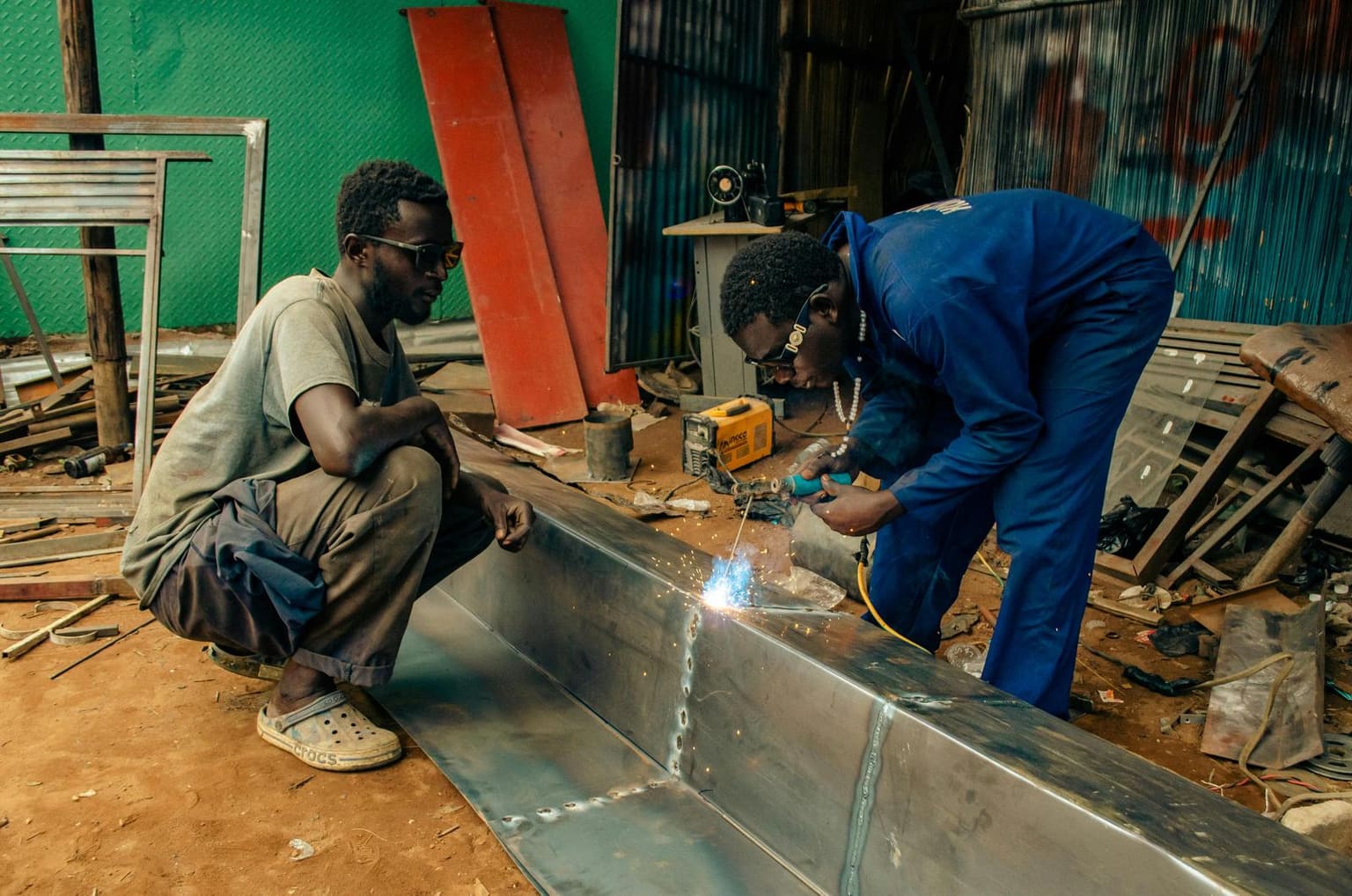
Beyond Commercial Kitchen fabricates all commercial kitchen equipment in verified Grade 201 | 304 stainless steel from our Nairobi workshop. We provide material test certificates confirming steel grade on request — a requirement for hospital, government, and food processing procurement.
Kenya's commercial kitchen market contains a mix of correctly specified Grade 201 | 304 fabrication (from local fabricators and reputable importers) and inferior Grade 201/202 equipment sold as "stainless steel professional grade". The magnet test and material certificates are the practical tools for distinguishing between them.