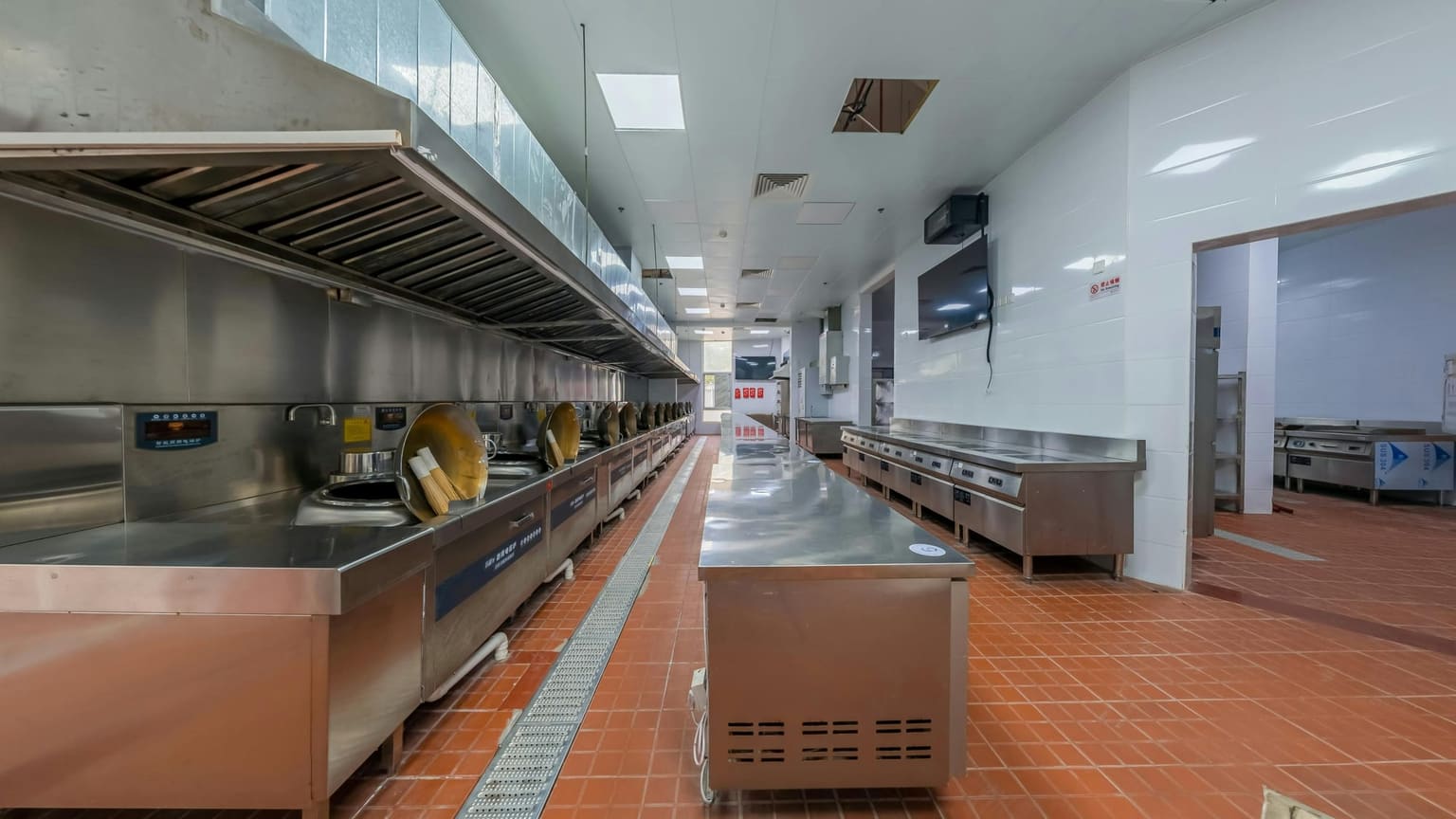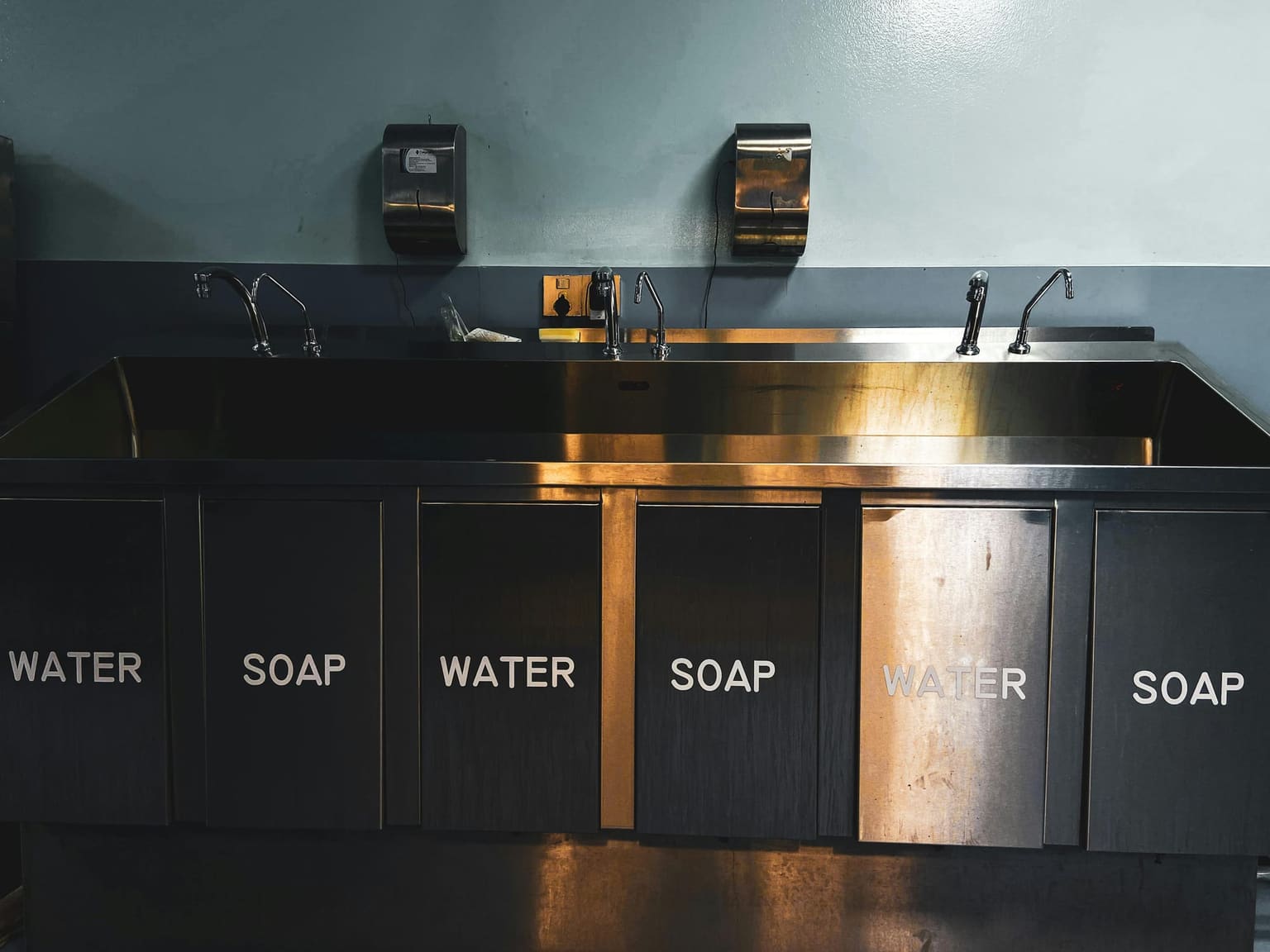
Fats, oils, and grease (FOG) are the single largest cause of blocked drains and sewer failures in Kenya's urban drainage systems. That is why NEMA (National Environment Management Authority) and most county councils legally require all commercial food service operations to install and maintain a grease trap — and why inspectors specifically check for them during food business licence renewals.
How Does a Grease Trap Work?
A grease trap works by slowing wastewater down inside a baffled chamber so fats, oils and grease separate out by density. FOG is lighter than water and floats to the surface, food solids are heavier and settle to the bottom, and only the relatively clean middle layer passes on to the drain.
The mechanism depends entirely on retention time. Wastewater has to stay in the chamber long enough for separation to happen, which is why an undersized trap fails even when it is perfectly clean: the water passes through too quickly for the grease to rise.
Baffles inside the chamber do two jobs. They break the incoming flow so it does not surge straight across to the outlet, and they hold back the accumulated grease layer so it cannot escape with the outflowing water. Once that layer grows deep enough to reach below the baffle, the trap stops separating and simply passes FOG downstream — which is why cleaning intervals matter as much as sizing.
Nothing about the process is powered or mechanical. A correctly sized, regularly emptied passive trap removes the large majority of FOG from kitchen wastewater at no running cost.
Is a Grease Trap Necessary?
Yes. For any commercial kitchen in Kenya a grease trap is both a regulatory requirement and a practical necessity. NEMA treats untreated kitchen effluent as a pollutant, and county health inspectors check for a trap during food business licensing.
The practical case is as strong as the compliance one. Fats that leave your kitchen as warm liquid cool in the drain line and solidify on the pipe wall, and each layer narrows the bore until the line blocks. That blockage rarely happens at a convenient moment — it happens during service, and clearing it means shutting the kitchen.
The cost comparison is stark. An under-sink stainless steel grease trap is a one-off KSh 35,000–90,000. Emergency drain jetting, lost trading hours, and sewer damage attributed to your premises cost considerably more than that, and they recur.
Where Is a Grease Trap Generally Located?
A grease trap should sit as close to the source of the grease as practical — usually directly beneath the pot wash or scrapping sink for an under-sink unit. The reason is temperature: FOG leaves the sink warm and still liquid, and the further it travels before reaching the trap, the more of it cools and coats the pipework instead.
Under-sink traps are installed in the drain line inside the kitchen, which makes them easy to reach for cleaning but means the cleaning happens in the working environment. Plan for that — allow enough clearance to lift the lid and remove the basket without dismantling the cabinet around it.
Underground grease interceptors sit outside the building, downstream of the whole kitchen, taking the combined output of every sink and floor drain. They need vehicle access for the licensed waste contractor who pumps them out, so their position is settled during civil works rather than the kitchen fit-out.
One arrangement to avoid: never let dishwasher discharge enter the trap directly and undiluted. Dishwasher water is hot and full of detergent, which emulsifies the grease and lets it pass straight through a trap that would otherwise have caught it.
Does the P-Trap Go Before or After the Grease Trap?
The P-trap goes after the grease trap, not before it. Wastewater must reach the grease trap first so the FOG can be separated; a P-trap upstream means grease accumulates in the P-trap and the pipework leading to it, which is precisely the problem the grease trap exists to prevent.
The correct sequence is sink outlet, grease trap, P-trap, drain line. The P-trap holds a water seal that stops sewer gas rising into the kitchen, and it does that job perfectly well on the clean side of the grease trap.
This gets plumbed the wrong way round often enough to be worth checking on an existing kitchen. If your grease trap appears to be catching very little while the pipes upstream of it keep blocking, the order is a likely cause.
The NEMA Requirement
Under the Environmental Management and Coordination Act and the Water Quality Regulations, commercial premises that discharge trade effluent (including kitchen wastewater) to the public sewer must treat that effluent to prescribed standards before discharge. For kitchens, this means intercepting FOG before it reaches the drainage system.
County environmental officers in Nairobi, Mombasa, Kisumu, and other major counties enforce this requirement during food business licence inspections and environmental audits. A grease trap that is installed but not maintained (filled beyond capacity) is treated the same as no grease trap at all.
Consequences of Non-Compliance
Operating without a compliant grease trap exposes your business to: fines issued by NEMA or the county environmental department; suspension of your food business operating licence pending installation of a compliant system; and in serious or repeat cases, forced closure of the premises.
Beyond the regulatory risk, grease entering the drainage system builds up in pipes, causing blockages that eventually require expensive emergency drain clearance — a cost that falls directly on the business whose effluent caused the blockage.
Types of Grease Traps
Counter-top grease traps sit on or beside the sink and intercept grease before water enters the drain. They are appropriate for very small operations — kiosks, small cafés, or food stalls — with a daily output of 20–50 covers. They require cleaning every 1–3 days and are not suitable for medium or high-volume operations.
Under-sink (inline) grease traps are installed directly in the drain line beneath the sink. They intercept FOG passively as wastewater flows through. Suitable for small-to-medium restaurants (up to approximately 80–100 covers per day), they require emptying every 1–2 weeks depending on the menu.
Underground grease interceptors are large-capacity units installed in-ground outside the building, handling the entire kitchen's wastewater output. Required for high-volume operations — restaurants serving 100+ covers per day, hotels, hospitals, schools, and institutions. They are pumped out by a licensed waste contractor typically every 1–4 weeks.
Sizing Your Grease Trap
The critical sizing variable is your daily wastewater flow rate — determined by your daily meal count, the volume of water used per meal, and the number of sinks discharging to the unit.
As a practical rule of thumb for Kenya's commercial kitchens: under-sink traps with 10–25 litre retention capacity suit operations of up to 50 covers per day; 50–100 litre units handle 50–100 covers per day; underground interceptors from 500 litres are required for 100+ covers per day. Hotel, hospital, and institutional kitchens typically require 1,000–3,000 litre interceptors.
Beyond Commercial Kitchen sizes all grease traps to NEMA guidelines based on your daily cover count. Contact us with your approximate daily meals and we will specify the correct unit.
Maintenance Is Non-Negotiable
A grease trap that is not cleaned regularly becomes a grease overflow point — the opposite of its purpose. The cleaning frequency depends on the trap size relative to your output: a correctly sized trap should be cleaned before it reaches 25% capacity with grease accumulation.
Keep a maintenance log showing cleaning dates and volumes removed. NEMA and county inspectors may request this log as part of a compliance audit. Contracted pumping services are available in all major Kenyan cities.