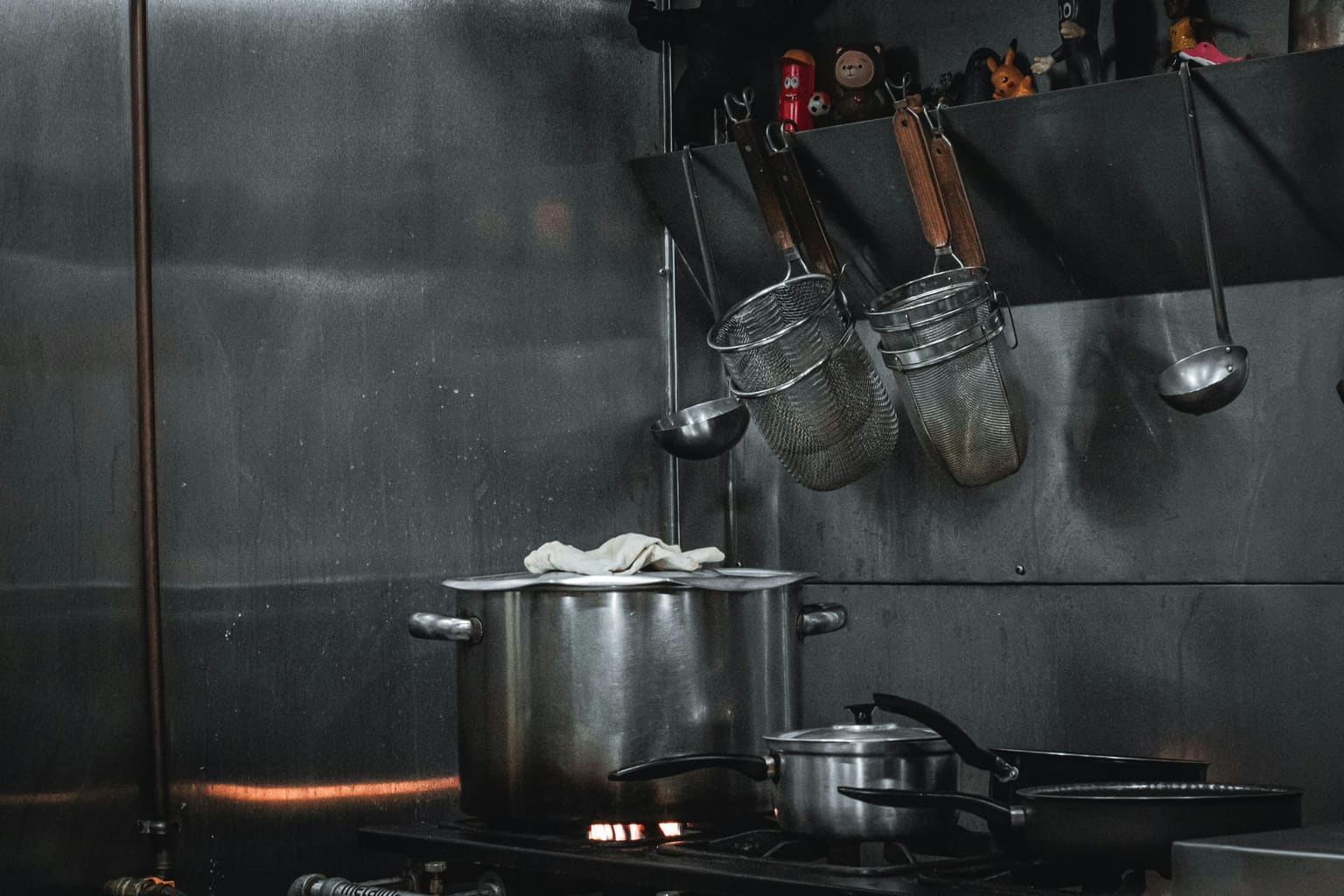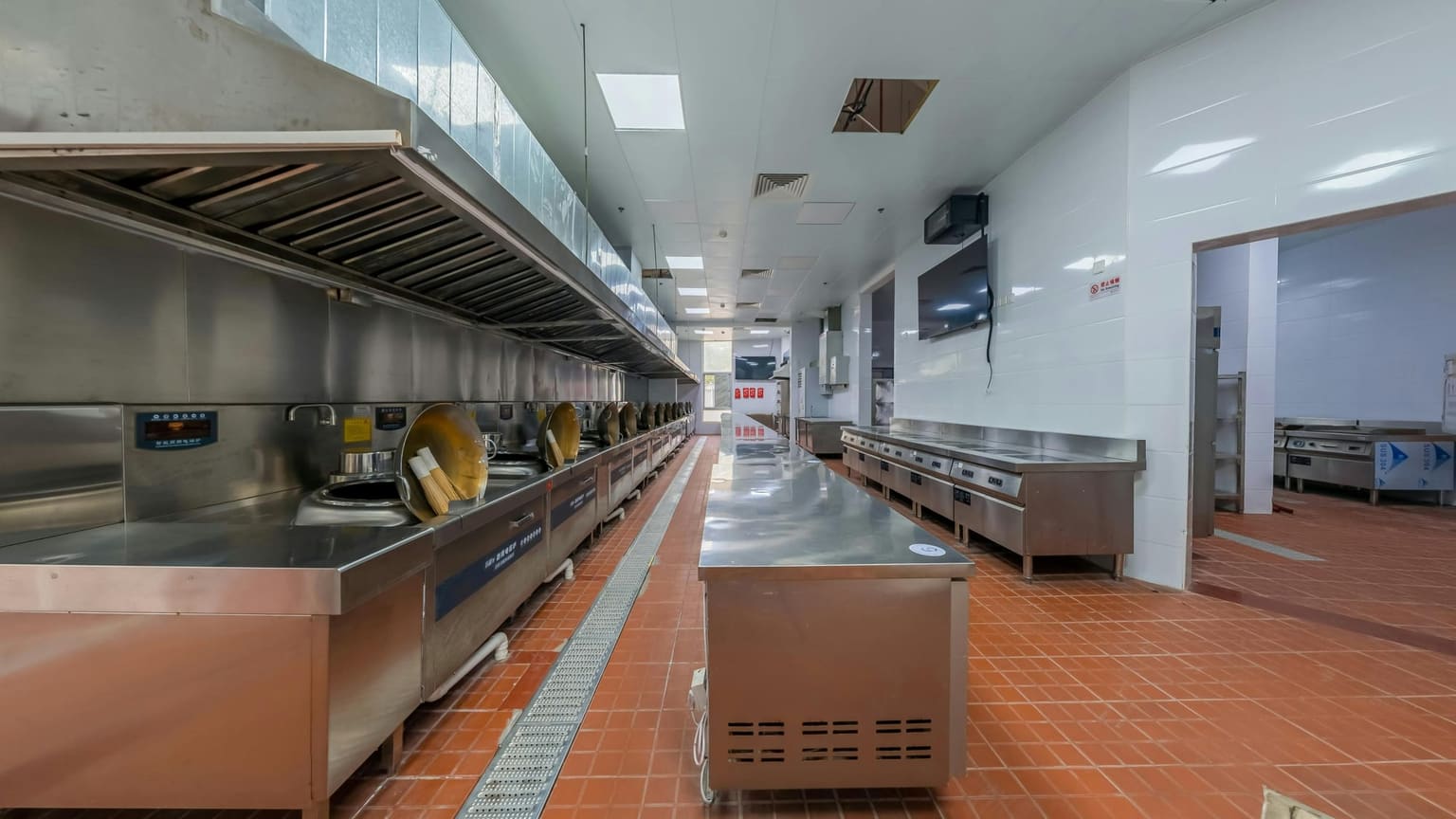
Most restaurant kitchens in Nairobi are small. Landlords allocate the minimum viable space for a kitchen, and restaurateurs face the challenge of fitting a fully compliant, operationally efficient commercial kitchen into 15–30 m². This guide shows you how to make a small kitchen work — without compromising on HACCP compliance, KEBS requirements, or the operational demands of a busy restaurant service.
What Is the Minimum Size for a Commercial Kitchen in Kenya?
Kenya's food business regulations do not prescribe a minimum kitchen area. What matters to inspectors is whether the space supports HACCP-compliant flow and contains the required elements — a food prep area, separate wash-up, a dedicated hand-washing point, adequate ventilation, and drainage.
In practice, a functional single-cuisine restaurant kitchen starts at approximately 12–15 m² of working kitchen space. Below this, it becomes difficult to fit the required zones without compromising HACCP flow — specifically, separating raw food handling from the wash-up area.
A kitchen under 12 m² is not impossible — outdoor cooking setups, ghost kitchens with a very limited menu, and highly specialised concepts (coffee, juices, simple wraps) can operate in less. But for a full-service menu, 15–25 m² is the realistic minimum.
Compressing the Five Zones into a Small Footprint
Every commercial kitchen needs five zones: receiving, storage, preparation, cooking, and wash-up. In a small kitchen, these zones must be compressed — but not eliminated. The key principle is that the HACCP flow direction (raw → prepared → cooked → service, with a separate dirty return via wash-up) must be maintained even in a compact layout.
Receiving: in a small kitchen, the receiving function is often a single offloading table just inside the service entrance. It does not need its own room — just a designated surface where deliveries are inspected before entering the kitchen.
Storage: vertical storage is the small kitchen's best friend. Stack shelving floor to ceiling on every available wall. A narrow 300 mm deep wall shelf takes almost no floor space but adds significant dry storage capacity.
Prep and cooking: in a small kitchen, the prep table and the cooking line often share the same zone, separated by a metre or less. This is acceptable as long as raw food prep is completed before cooking begins — a temporal HACCP control rather than a spatial one.
Wash-up: the most critical placement decision in a small kitchen. The wash-up sink must be positioned so that dirty dishes do not travel through the food prep area to reach it. Even in a very small kitchen, put the wash-up at the back or side — never in the centre of the kitchen.
Equipment Choices for Small Restaurant Kitchens
Countertop cooking equipment saves floor space. A countertop fryer, a countertop griddle, or a single-module induction cooker placed on a worktable uses vertical space rather than floor space, and can be removed or reconfigured more easily than a floor-standing range.
Combined prep-sink tables: a worktable with an integrated sink bowl in one end saves one piece of floor equipment. For a small kitchen, a 1,800 mm wide table with an integrated prep sink at one end gives you both prep surface and a sink in the footprint of a single table.
Wall-mounted extraction: in kitchens with low ceilings, a wall-mounted extraction canopy directly behind the cooking line (rather than a ceiling-hung island canopy) is more space-efficient and easier to install.
Under-counter refrigeration: a prep fridge under the worktable keeps daily-use ingredients immediately accessible without dedicating a separate floor-standing fridge.
What Nairobi County Inspectors Require in a Small Kitchen
Size does not exempt a kitchen from compliance requirements. Inspectors checking a small kitchen look for exactly the same things as in a large one: food-grade (Grade 201 | 304) surfaces, a dedicated hand-washing basin, a grease trap, adequate extraction, and no cross-contamination between raw and dirty flows.
The hand-washing basin is the most commonly missing item in small Nairobi restaurant kitchens. There is always a temptation to omit it to save space — but inspectors specifically look for it and will fail the kitchen without it. A wall-mounted Grade 201 | 304 hand basin takes 300 × 250 mm of wall space and solves this compliance requirement entirely.
Using a Professional Kitchen Designer for a Small Kitchen
Small kitchens often benefit more from professional design input than large ones. In a large kitchen, there is room to correct layout mistakes. In a small kitchen, a wrong equipment placement decision can make the entire kitchen dysfunctional — and retrofitting is expensive once walls and drainage are fixed.
Beyond Commercial Kitchen carries out free kitchen design consultations for Nairobi projects — we visit your site, take measurements, and produce a layout drawing that maximises your available space while meeting HACCP and KEBS requirements. For small kitchens especially, this investment at the design stage prevents expensive retrofitting.