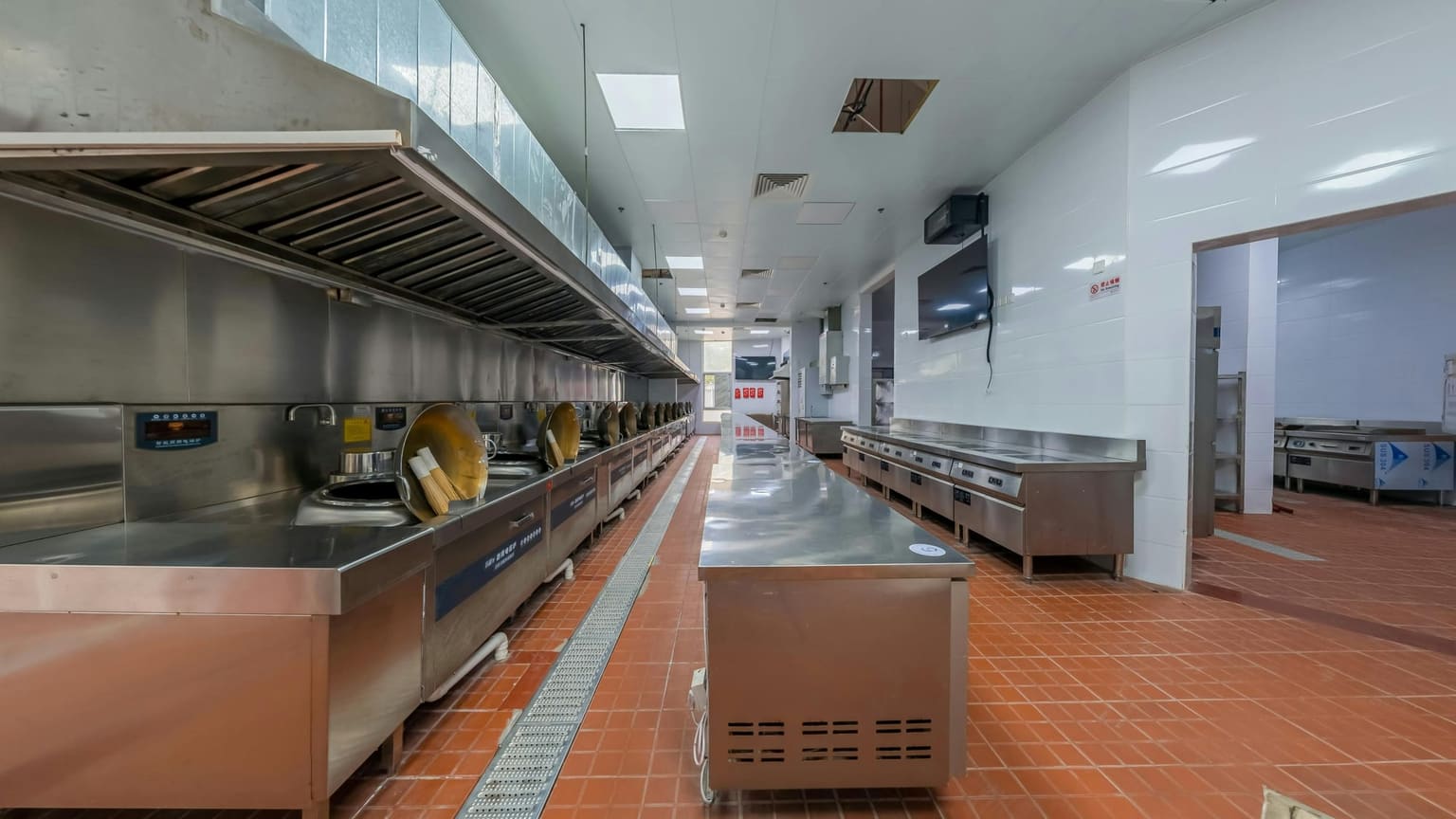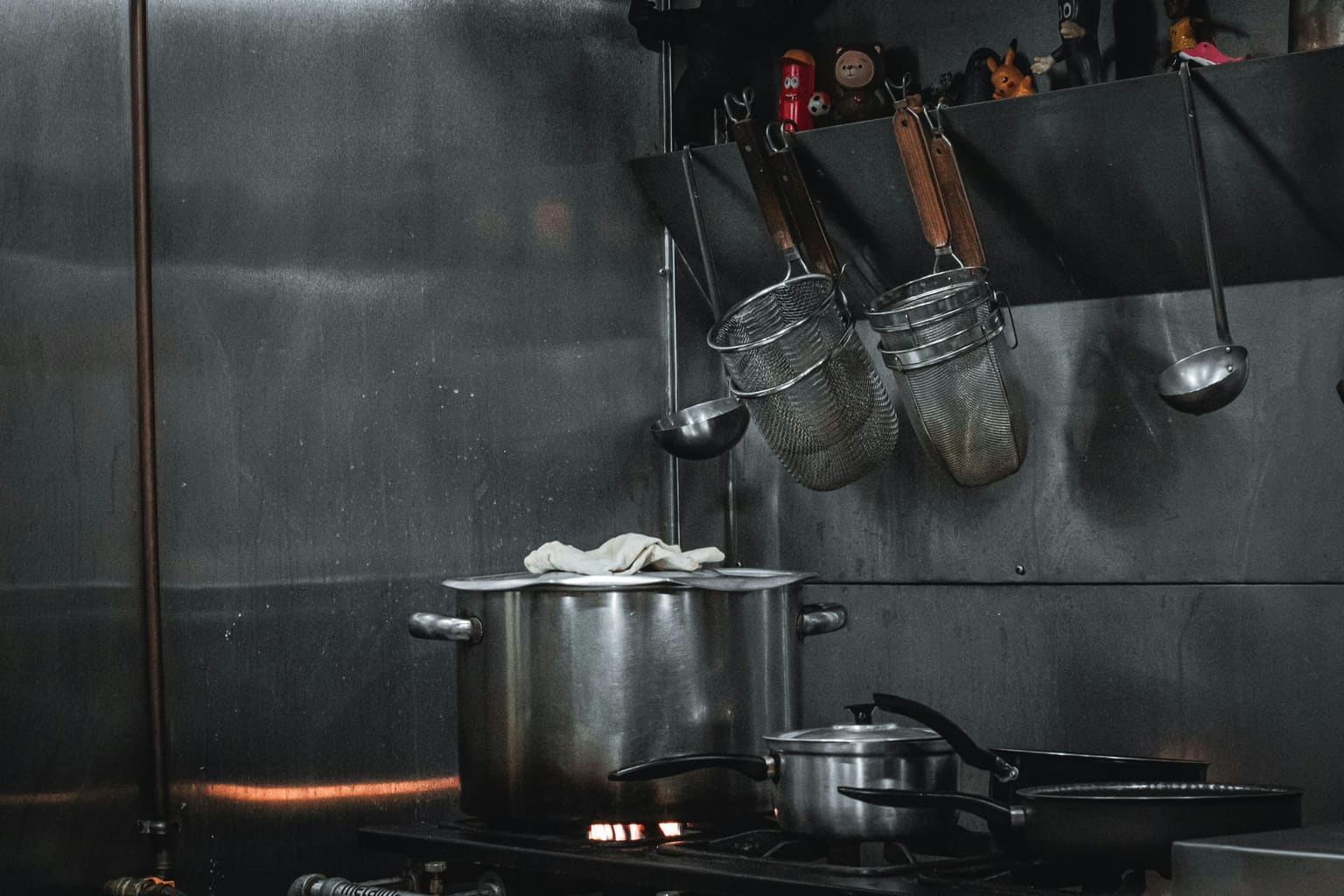
Beyond Commercial Kitchen has designed and installed kitchen equipment for 50+ commercial kitchens across Kenya. We see the same mistakes repeated — on new restaurant builds, on hotel fit-outs, and on institutional projects. These mistakes cost money to fix, cause inspection failures, and in some cases create ongoing operational problems that affect profitability for years. Here is an honest account of the most common ones, and exactly how to avoid them.
Mistake 1 — No Dedicated Hand-Washing Sink
This is the single most common cause of food business licence inspection failure in Nairobi. A dedicated hand-washing basin — separate from food prep sinks and wash-up sinks — is a HACCP requirement. County health inspectors specifically look for it and will fail the kitchen if it is missing.
Why it happens: kitchen designers and fit-out contractors who are not familiar with food safety requirements often omit it to save space or cost. A hand basin is a small item (Grade 201 | 304, wall-mounted, KSh 8,000–14,000) — the cost of omitting it is an inspection failure and a delay in licence approval, not a saving.
How to avoid it: put a wall-mounted hand-washing basin on the equipment list from day one. Position it at the entry point to the food preparation area. It must have soap and a paper towel dispenser adjacent to it.
Mistake 2 — Buying the Wrong Steel Grade
A significant volume of commercial kitchen equipment sold in Kenya — particularly imported worktables and sinks — is fabricated from Grade 201/202 stainless steel, not Grade 201 | 304. This is sold as "stainless steel" or "professional grade" at a price that seems competitive. It looks identical in a showroom.
The problem: Grade 201/202 corrodes in commercial kitchen conditions within 12–24 months. Surface pitting appears first, followed by rust spots, then structural degradation. A kitchen equipped with inferior steel typically requires a full replacement of all worktables and sinks within two years — at far greater cost than the initial saving.
How to avoid it: specify Grade 201 | 304 in writing on your equipment order. Request a material test certificate from the supplier. Use the magnet test — Grade 201 | 304 is non-magnetic; a strong magnet should not stick firmly to the surface.
Mistake 3 — Undersized Extraction
An extraction canopy that is too small for the cooking equipment below it is one of the most common and most expensive mistakes in Nairobi restaurant kitchens. An undersized canopy allows grease-laden steam to escape into the kitchen, creating dangerous working conditions, grease buildup on every surface, and an inspection failure.
Why it happens: some fit-out contractors size the canopy to the range only, not to the entire cooking suite. A canopy should extend at least 300 mm beyond the outer edge of the cooking equipment on every exposed side. A 6-burner range with a fryer beside it needs a canopy wide enough to cover both pieces of equipment with the 300 mm overhang.
How to avoid it: use the 300 mm overhang rule on all sides of all cooking equipment. If in doubt, contact Beyond Commercial Kitchen — we size extraction systems from an equipment schedule as standard.
Mistake 4 — No Grease Trap
Operating a commercial kitchen without a grease trap is a NEMA violation. County environmental officers check for grease traps during food business licence inspections and environmental audits. A business caught operating without one faces fines and potential licence suspension.
Why it happens: grease traps are not expensive (KSh 8,000–45,000 for a restaurant-scale undersink trap) but they are easy to overlook if the fit-out contractor is not familiar with NEMA requirements.
How to avoid it: put a grease trap on the equipment list and specify its position in the kitchen drainage plan before flooring is laid. Underground interceptors must be installed before concrete is poured — retrofitting after the fact is expensive.
Mistake 5 — Equipment That Does Not Fit After Delivery
One of the most frustrating and expensive kitchen setup problems is equipment arriving on site that does not fit — a worktable too wide for the space, a cooking station that does not clear a doorway, a canopy that hits the ceiling before it reaches the required suspension height.
Why it happens: equipment is ordered from a catalogue without site measurements, or from imported standard sizes that do not match the kitchen footprint. Standard imported worktable sizes (typically 1,500 mm, 1,800 mm) may not match non-standard Kenyan kitchen layouts.
How to avoid it: carry out a site survey with measurements before ordering equipment. Locally fabricated equipment is made to your exact dimensions — there is no reason to accept a standard size that does not fit your kitchen.
Mistake 6 — Wash-Up Placed in the Centre of the Kitchen
Placing the wash-up sink in the middle of the food preparation area creates a HACCP cross-contamination problem. Dirty crockery passes through the food prep zone, contaminating clean prep surfaces. This is a specific inspection failure point.
How to avoid it: the wash-up area should be at one end or side of the kitchen, with dirty dishes never crossing the food preparation zone. Even in a very small kitchen, there is almost always a wall position for the wash-up that does not require it to be in the centre of the kitchen.